
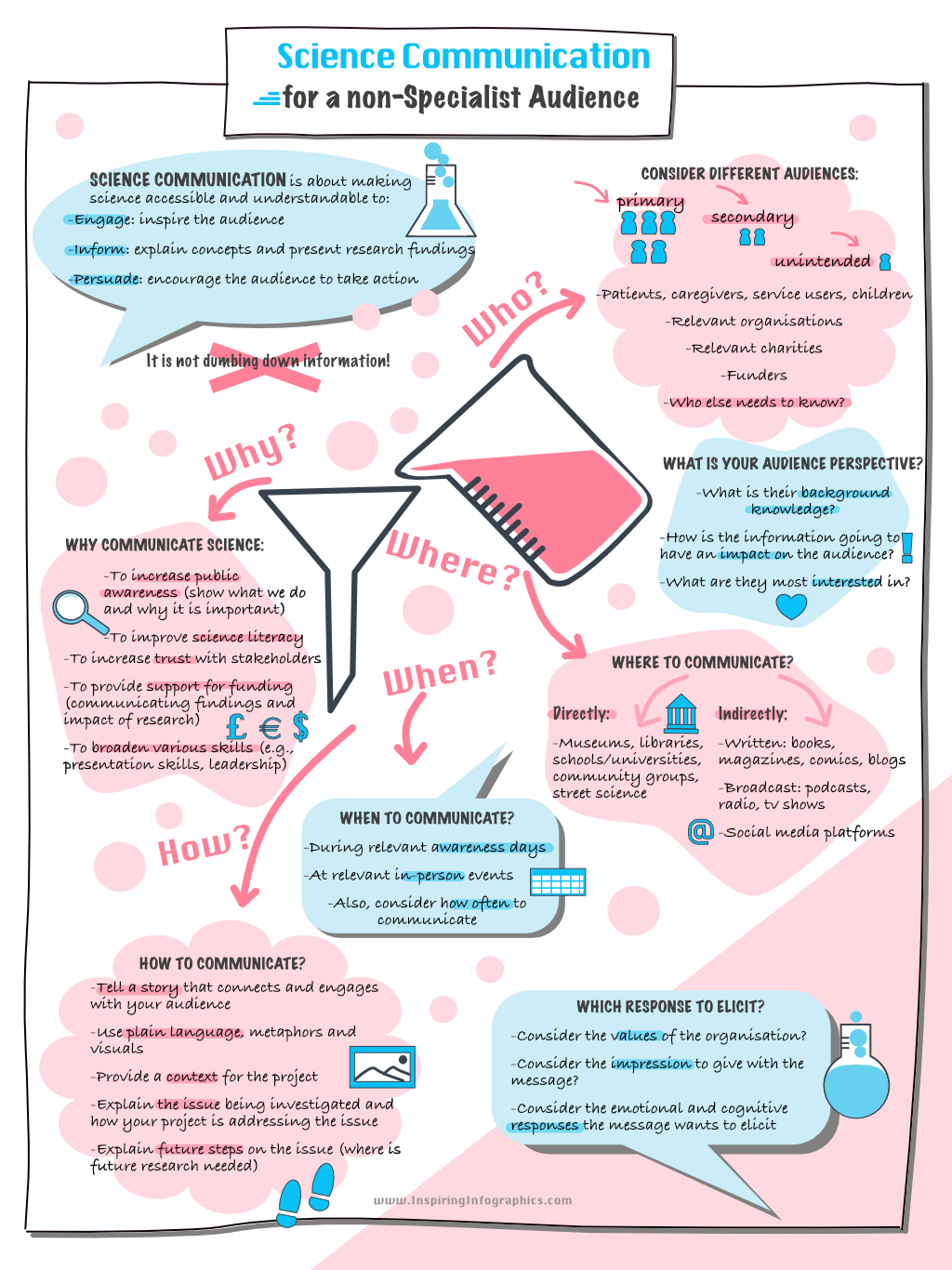
Science communication is about making science accessible and understandable to engage and inspire the audience, to explain concepts and present research findings and also to encourage people to take action.
To communicate to a non-specialist audience, consider who is your primary audience, and also think about the secondary and unintended audiences.
There could be different reasons to communicate science, for instance: to increase public awareness on a topic, to improve trust with stakeholders, or to explain funders why is necessary to conduct a piece of research. Also, for yourself as a scientist, science communication provides you with opportunities to broaden your skills.
Consider your audience perspective: what do they know already about the topic and how much? What areas do you think they would like to find out more about?
Telling a story using plain language, metaphors and visuals will definitely spark interest and curiosity from the audience.
There are many different ways to communicate science, which could be directly, like for instance talking to the people in person in museums, or indirectly, for instance designing comics.
See which awareness days could be relevant for your topic and if you missed one of the relevant days this year, then use the time to plan in advance for next one.

La comunicación científica consiste en hacer que la ciencia sea accesible y comprensible para involucrar e inspirar a la audiencia, explicar conceptos y presentar los resultados de las investigaciones y también alentar a las personas a actuar.
Para comunicar a una audiencia no especializada, considera tu audiencia principal y también piensa en la audiencia secundaria e imprevista.
Puede haber diferentes razones para comunicar la ciencia, por ejemplo: aumentar la conciencia pública sobre un tema, mejorar la confianza con las partes interesadas o explicar a los financiadores por qué es necesario realizar una investigación. Además, como científico, este tipo de comunicación te brinda oportunidades para ampliar habilidades.
Considera la perspectiva de tu audiencia: ¿qué saben ya sobre el tema y cuánto? ¿Sobre qué áreas crees que les gustaría saber más?
Contar una historia utilizando un lenguaje sencillo, metáforas y elementos visuales definitivamente despertará interés y curiosidad.
Hay muchas formas diferentes de comunicar la ciencia, directamente por ejemplo hablando en persona en museos, o indirectamente por ejemplo, diseñando cómics. Mira qué días de concienciación podrían ser relevantes para tu tema y, si perdiste uno de los días relevantes este año, entonces usa el tiempo para planificar con anticipación para el año que viene.
 InspiringInfographics