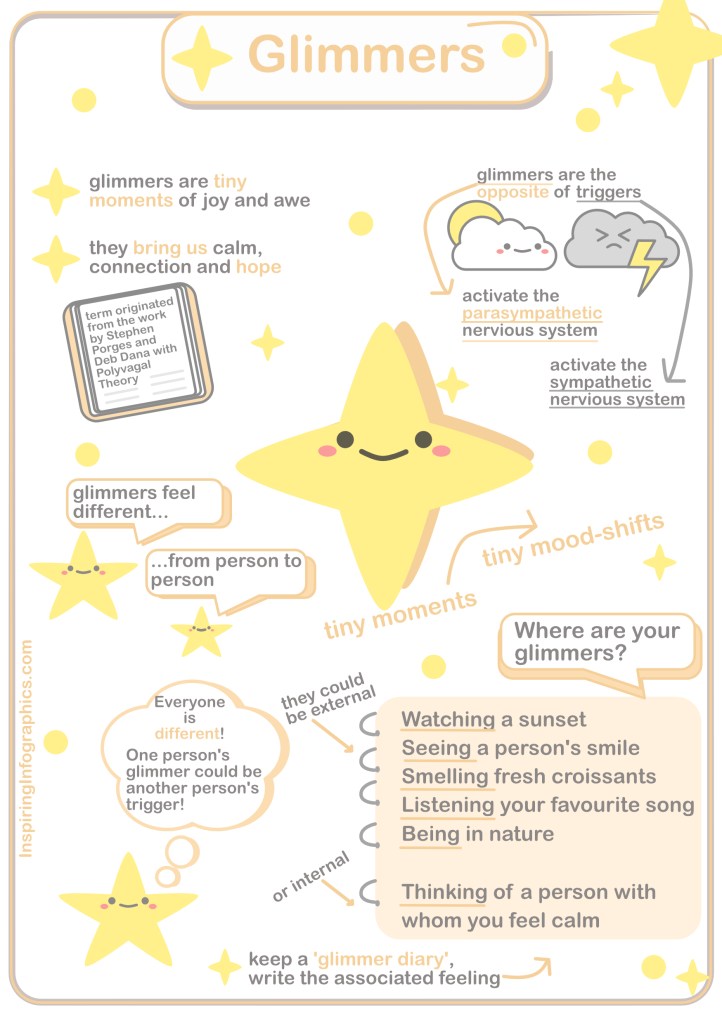
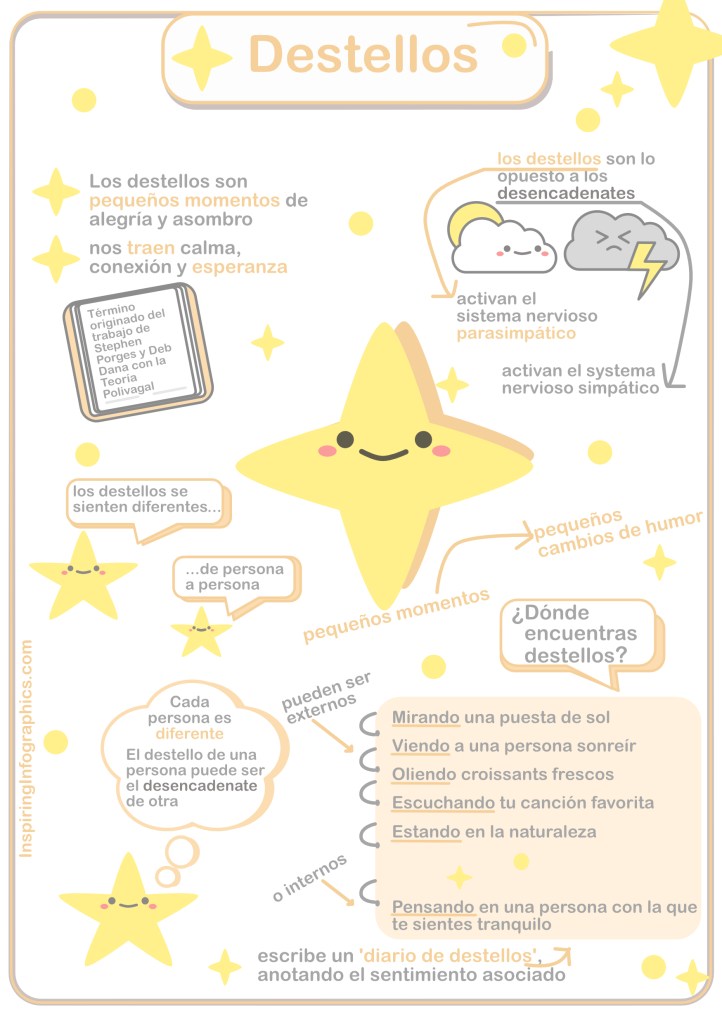
Glimmers are the opposite of triggers, little moments of joy that bring us calm and hope. Watching a sunset, smelling freshly made croissants, listening to a beautiful song… are some of my glimmers; although they are different from person to person.
Do you need to design a poster for a conference and don’t know where to start?
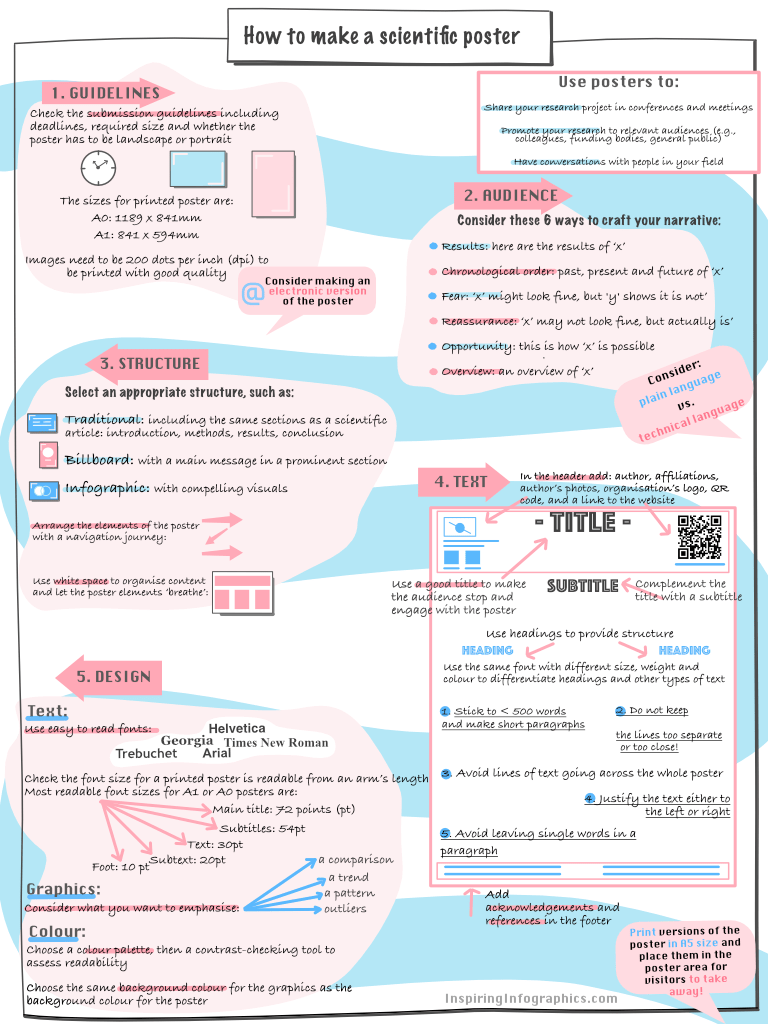
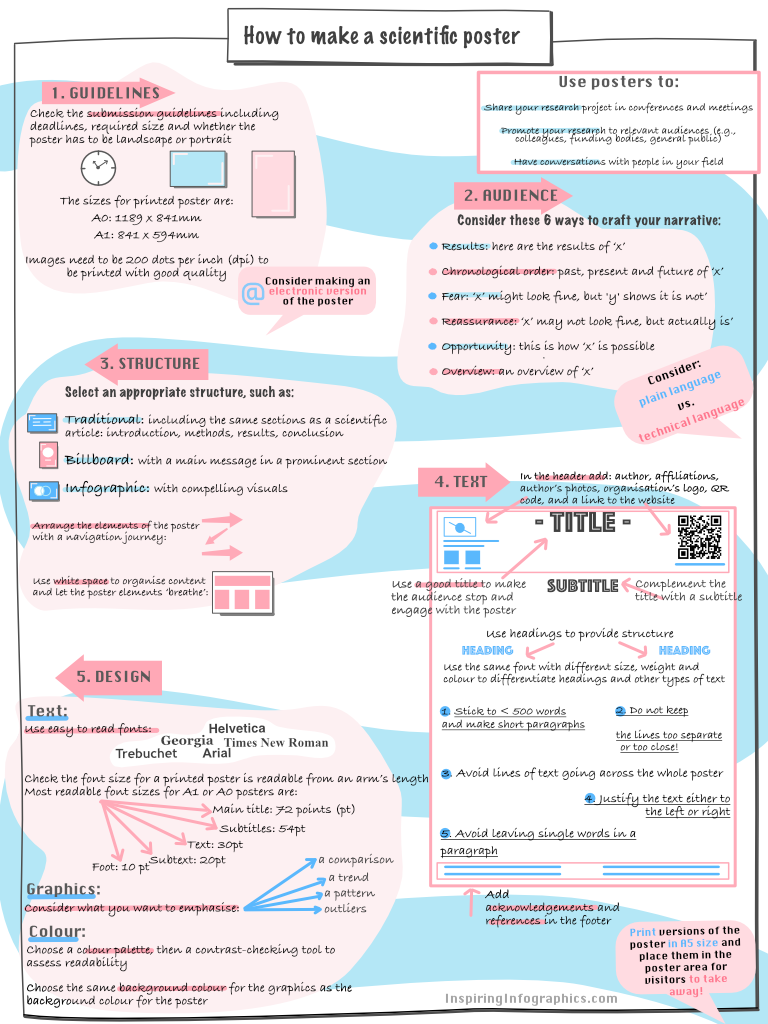
Posters are a great way to share your research project in conferences and meetings, to promote your research to different audiences and to start conversations with people in your field. Follow these five steps to make your poster:
First have a look at the submission guidelines: when is it due by, the sizes, and all the requirements. Even if you are going to print a poster, it may be useful to have an electronic version to share it via email or social media.
Second, think about the audience, and how can you best craft your narrative.
Third: select an appropriate structure, you can go for the traditional one, using the same sections as a scientific study; or go for a more modern approach, including just a main message and a QR link to the main study.
Fourth: use the header to include information about the authors and the department, and the foot to add acknowledgments and references. Do not write more than 500 words for the whole poster.
Finally, improve your poster by making sure the text is easy to read, consider which graphics to add depending on what you need to emphasise. Select a colour palette and make sure the text is still readable.
¿Necesitas diseñar un póster para una conferencia y no sabes por dónde empezar?
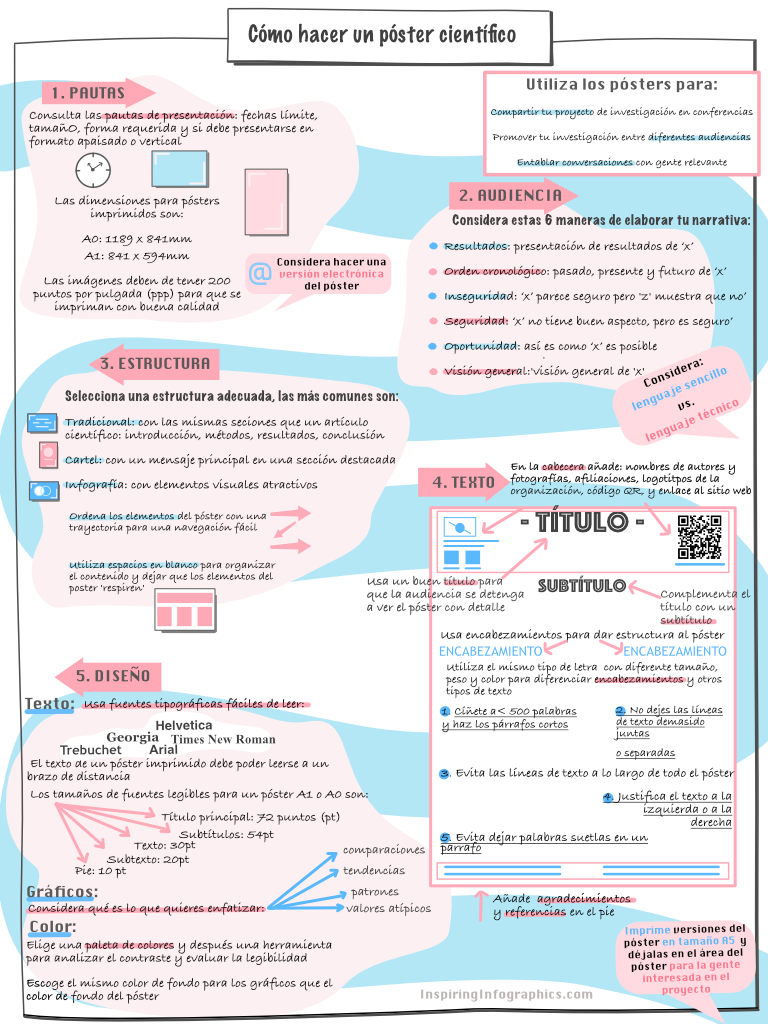
Los pósters son una excelente manera de compartir tu proyecto de investigación en conferencias y reuniones, promover tu investigación a diferentes audiencias e iniciar conversaciones con personas relevantes en tu campo.
Sigue estos cinco pasos para hacer tu póster:
Primero, echa un vistazo a las pautas de envío: cuándo se debe entregar, los tamaños y todos los requisitos. Incluso si vas a imprimir un póster, puede ser útil tener una versión electrónica para compartir por correo electrónico o redes sociales.
Segundo, piensa en la audiencia y en cómo puedes elaborar mejor tu narrativa.
Tercero: selecciona una estructura adecuada, puedes optar por la tradicional, utilizando las mismas secciones que un estudio científico u optar por un enfoque más moderno, incluyendo un mensaje principal y un enlace QR al estudio principal.
Cuarto: utiliza la cabecera para incluir información sobre los autores y el departamento, y el pie para añadir agradecimientos y referencias. No escribas más de 500 palabras para todo el póster.
Por último, mejora tu póster asegurándote de que el texto sea fácil de leer. Piensa qué gráficos añadir según lo que necesites destacar. Selecciona una paleta de colores y asegúrate de que el texto se puede leer.
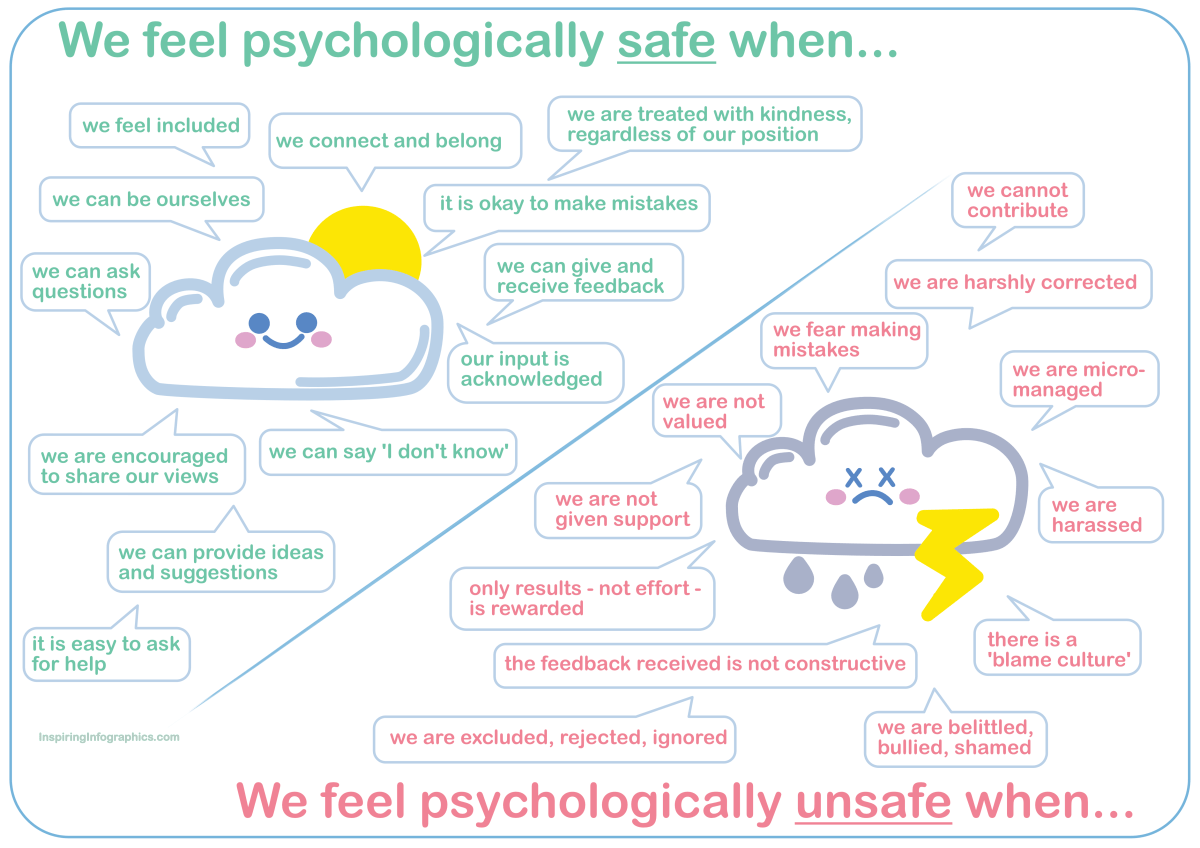
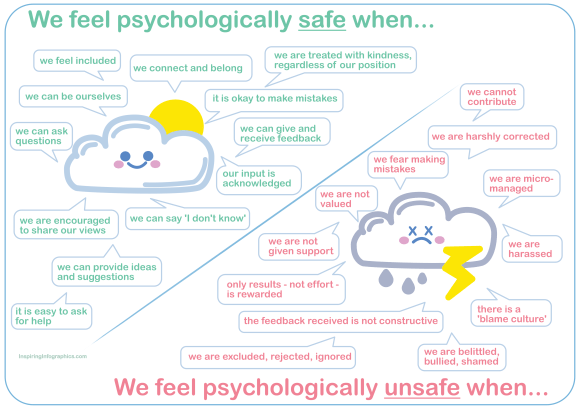
Psychological safety: the definition of psychological safety was developed by Kahn in 1990, as the ability to ‘employ or express themselves physically, cognitively, and emotionally’. Later, in 1999, after researching performance in clinical teams, Edmonson came up with the following definition: ‘a shared belief held by members of a team that the team is safe for interpersonal risk taking’. More recently, in 2019, Clark suggested a model with four stages for progression to psychological safety: 1 Inclusion safety: feeling included and accepted for who we are. 2 Learner safety: feeling safe to learn, ask questions, give and receive feedback, and make mistakes. 3 Contributor safety: being encouraged by the team to contribute. 4 Challenger safety: feeling safe to challenge the status quo.
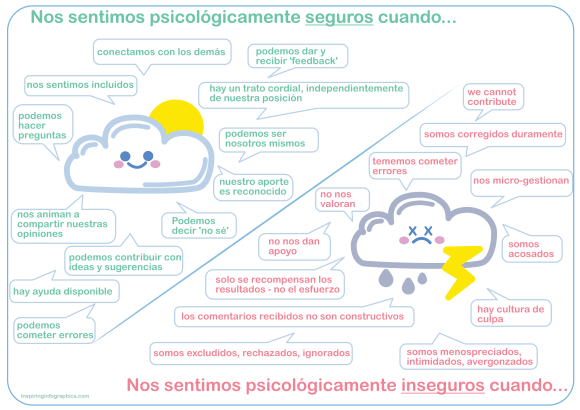
Seguridad psicológica: la definición de seguridad psicológica fue desarrollada por Kahn en 1990, como la capacidad de ‘emplearse o expresarse física, cognitiva y emocionalmente’. Más tarde, en 1999, después de investigar el rendimiento en equipos clínicos, Edmonson llegó a la siguiente definición: ‘una creencia compartida por los miembros de un equipo de que el equipo es seguro para asumir riesgos interpersonales’. Más recientemente, en 2019, Clark sugirió un modelo con cuatro etapas para progresar hacia la seguridad psicológica:
Seguridad de inclusión: sentirse incluidos y aceptados por lo que somos.
Seguridad del aprendiz: sentirse seguros para aprender, hacer preguntas, dar y recibir comentarios y cometer errores.
Seguridad para contribuir: ser alentado por el equipo a contribuir.
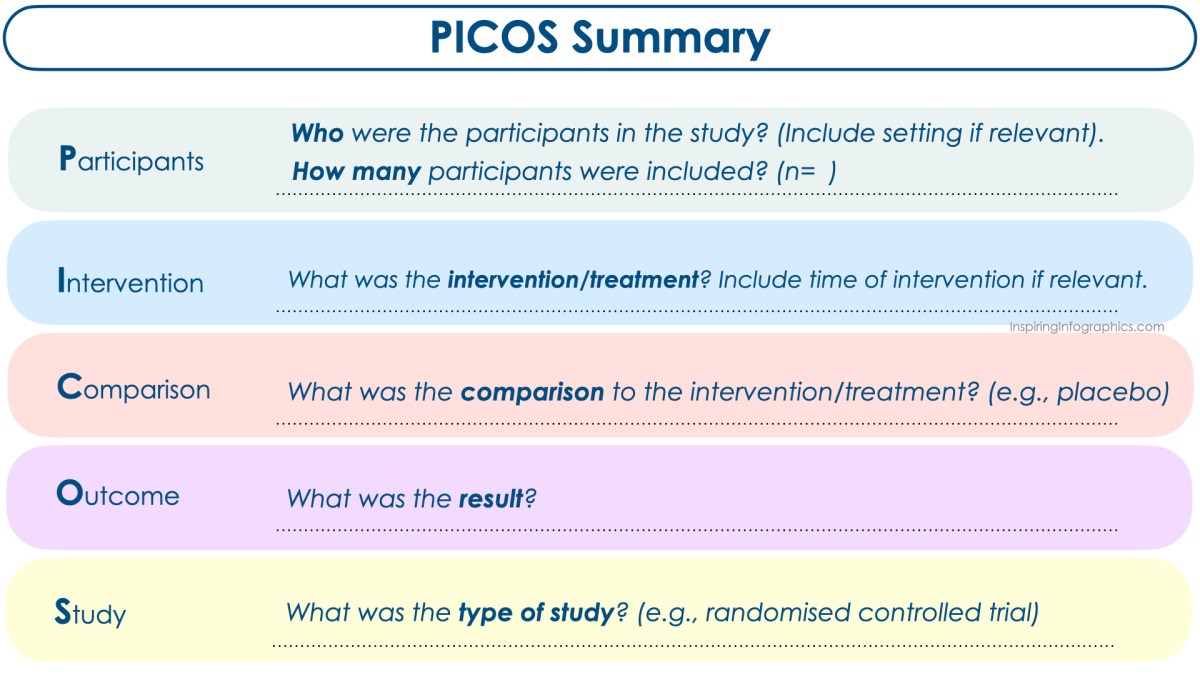
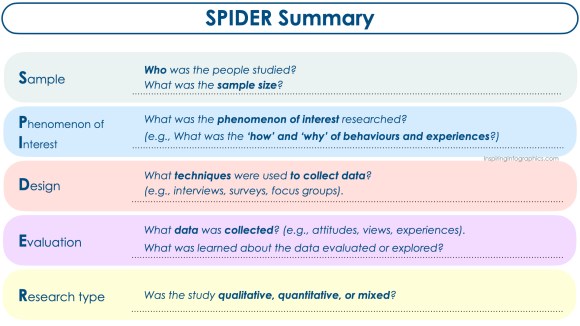
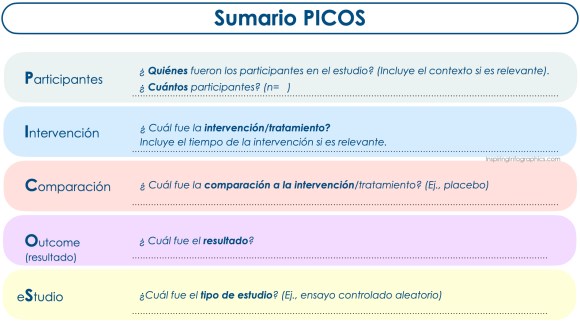
PICOS and SPIDER summaries: are very useful for searching studies in scientific literature databases, creating protocols for research, and helping us to study. The PICOS summary is used for quantitative research and stands for:
P – Participants: specify the participants and its characteristics and their context if it is relevant. Enter the total number of participants.I – Intervention: state the intervention or treatment and include how long the intervention took, if relevant.
C – Comparison: what did the intervention or treatment was compared with? Add the comparison treatment, for instance placebo.
O – Outcome: is the result of the study.S – Study: specify the type of study, for example whether it was a randomised controlled trial, a longitudinal study, etc.T
he SPIDER summary: can be more helpful for qualitative research, and stands for:
S – Sample: who were the people studied? Add the sample size.
PI – Phenomenon of Interest: this is the phenomenon of interest researched such as the ‘how’ or ‘why’ of behaviour and experiences.
D – Design: that is, the techniques employed to get data, like interviews.
E – Evaluation: this is what was learned from the evaluation or exploration of the data. Specify first the data collected, for instance: attitudes, views, experiences.
R – Research type: state whether the study was qualitative, quantitative or mixed.
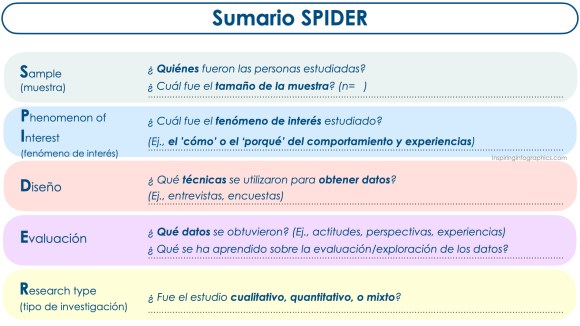
Sumarios PICOS y SPIDER: son muy útiles para buscar estudios en bases de datos de literatura científica, crear protocolos de investigación y ayudarnos a estudiar. El sumario PICOS se utiliza para la investigación cuantitativa y significa: P – Participantes: especifica los participantes y sus características y su contexto si es relevante. Introduce el número total de participantes. I – Intervención: indica la intervención o el tratamiento, e incluye cuánto tiempo duró la intervención, si corresponde. C – Comparación: ¿Con qué se comparó la intervención o el tratamiento? Agrega el tratamiento de comparación, por ejemplo, si se utilizó placebo. O – (Outcome) – resultado: se trata del resultado del estudio. S – (Study) – studio: especifica el tipo de studio, por ejemplo, si fue un ensayo controlado aleatorio.
El sumario SPIDER se usa para los estudios qualitativos. S – (Sample) – muestra: especifica quiénes fueron las personas estudiadas, y el tamaño de la muestra. PI – (Phenomenon of Interest): el fenómeno de interés estudiado, por ejemplo: el ‘porqué’ or el ‘cómo del comportamiento y experiencas D – Diseño – incluye las técnicas que se utilizaron para obtener datos, ej., entrevistas. E – Evaluación – una vez que se escriben los datos recogidos (ej., actitudes, perspectivas, experiencias) se reflexiona sobre lo que se ha aprendido sobre la evaluación o exploración de los datos del estudio. R – (Research type) / especifica el tipo de investigación (ej., qualitativo, quantitativo, o mixto).
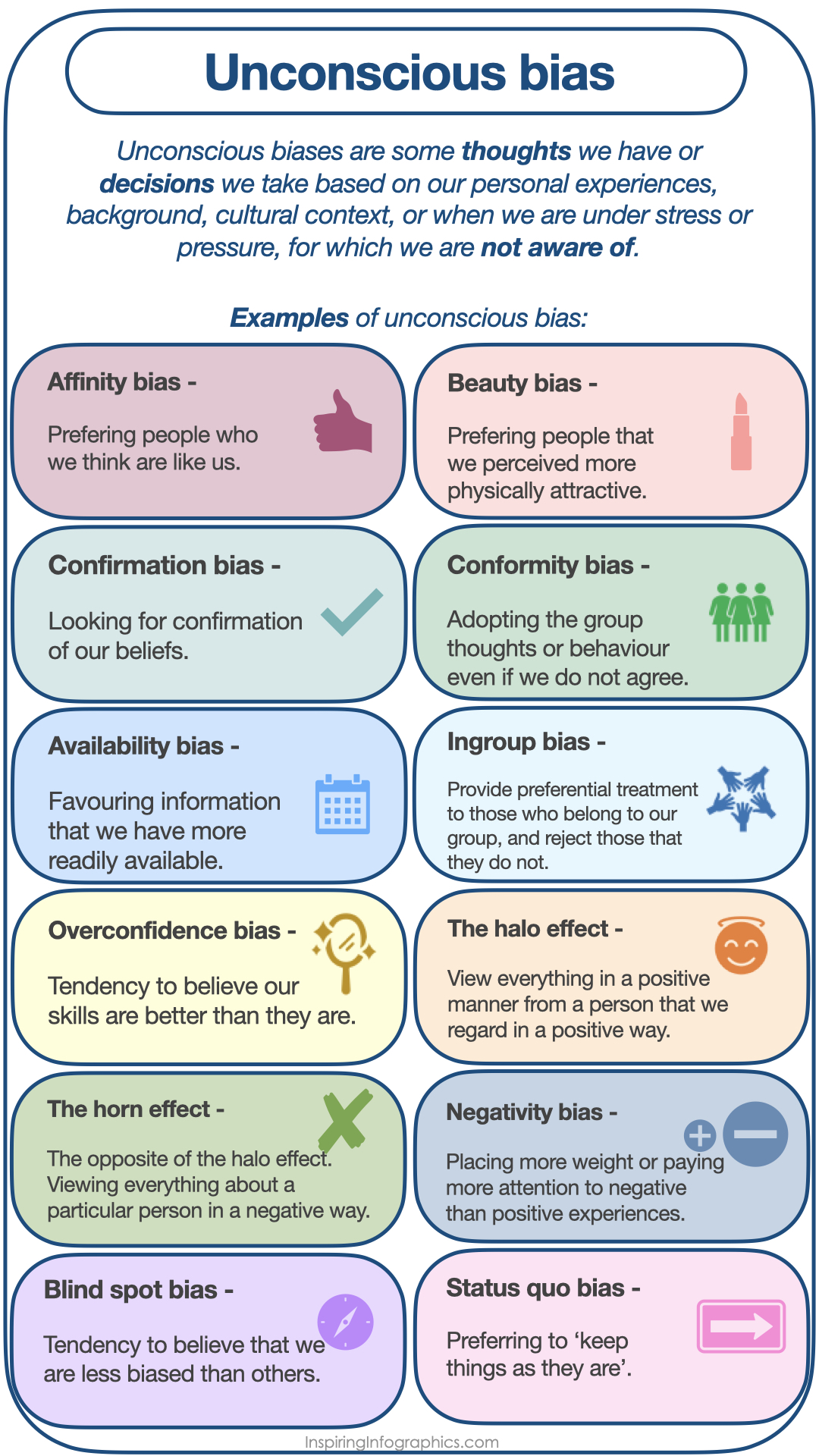
Unconscious biases: are some thoughts we have, and decisions we make based on our personal experiences, background, cultural context, and even if we are under stress or pressure, and for which we are not aware of. Subtle signs of unconscious biases during a conversation for instance could be being less empathetic, not making eye contact, interrupting, or paying less attention to some people. We all have unconscious biases, so it is helpful to be self-aware about them; other actions we can take are using inclusive language and welcoming diversity. Some types of unconscious biases are:
–Affinity bias: preferring people who we think are like us. –Availability bias: favouring the information we have more readily available. –Beauty bias: preferring people that we perceived as more physically attractive. –Blind spot bias: our tendency to believe that we are less biased than others. –Confirmation bias: looking for confirmation of our belief. –Conformity bias: is adopting the group thoughts or behaviour even though we do not agree with them. –Decision fatigue: is the decrease in the quality of our decisions after taking too many. –Ingroup bias: provide preferential treatment to people who belong to our group and reject those that do not belong to our group. –Loss aversion: is having a stronger mental reaction from losing than from gaining (e.g., if we lose an x amount of money, we feel more upset than happy if we earn that same amount). –Negativity bias: placing more weight, by for instance dwelling for longer, or paying more attention to negative experiences than positive ones. –Overconfidence bias: is the tendency to believe that our skills are better than they are. –Status quo bias: is preferring to “keep things as they are” because it takes less effort to change. This could be for various reasons like fear of the unknown, resistance to change, or because we need more effort to change. –Temporal discounting: is preferring an immediate short gain over a bigger delayed reward. –The halo effect: when we regard a person in a positive way, and we view everything about that person in a positive manner. –The horn effect: the opposite of the halo effect, so we view everything about that person in a negative way.
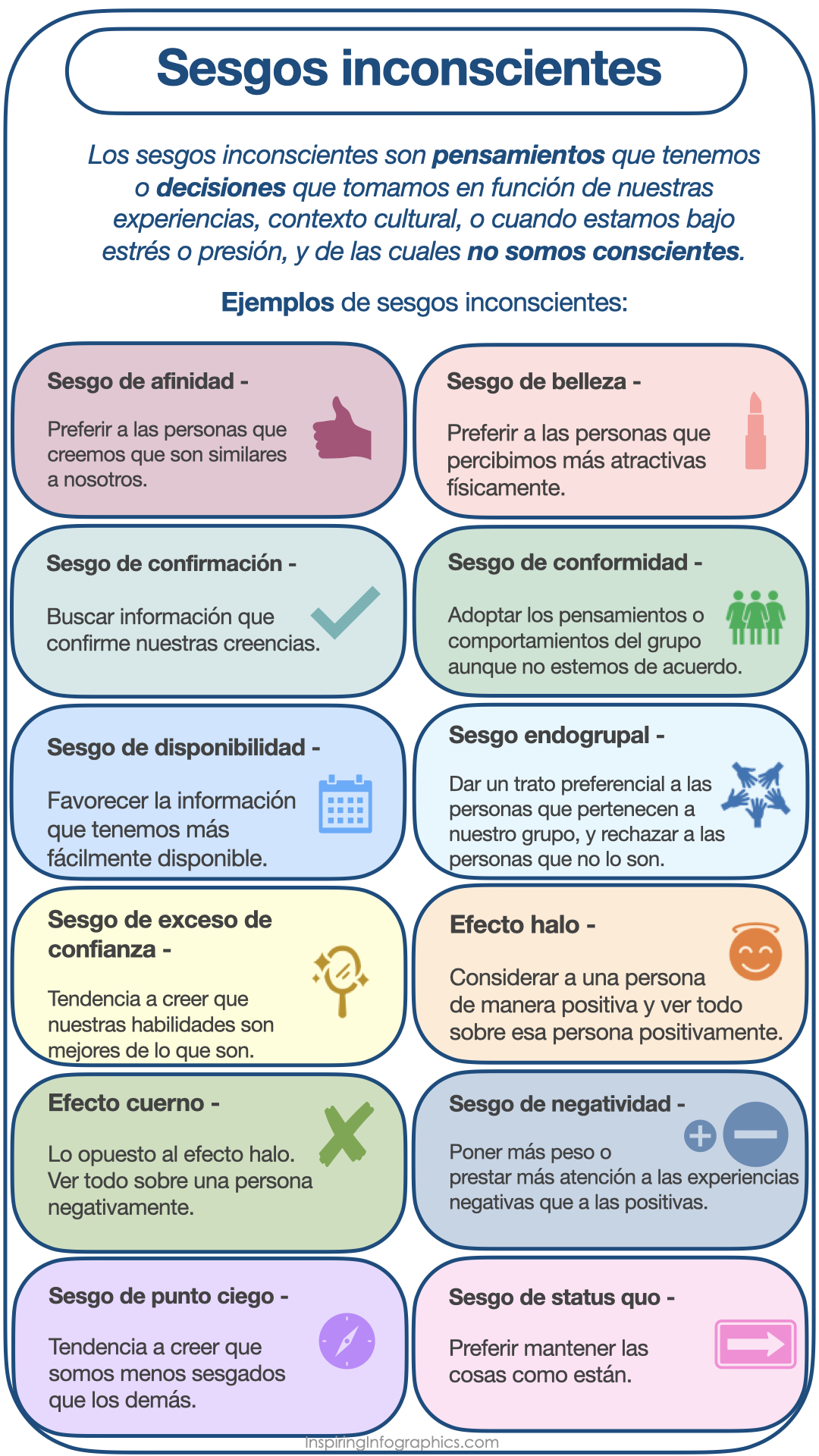
Sesgos inconscientes: son algunos pensamientos que tenemos y decisiones que tomamos en función de nuestras experiencias personales, antecedentes, contexto cultural e incluso si estamos bajo estrés o presión, y de los cuales no somos conscientes. En una conversación por ejemplo, señales sutiles de sesgos inconscientes podrían ser ser menos empáticos, no hacer contacto visual, interrumpir, o prestar menos atención algunas personas. Todos tenemos sesgos inconscientes, por lo que es útil ser consciente de nuestros sesgos. Otras acciones que podemos tomar son usar un lenguaje inclusivo y dar la bienvenida a la diversidad. Algunos tipos de sesgos inconscientes:
–Sesgo de afinidad: preferir a las personas que creemos que son similares a nosotros. –Sesgo de belleza: preferir a las personas que percibimos físicamente más atractivas. –Sesgo de confirmación: buscar información que confirme nuestra creencia. –Sesgo de conformidad: es adoptar los pensamientos o comportamientos del grupo aunque no estemos de acuerdo. –Fatiga de decisión: es la disminución en la calidad de nuestras decisiones cuando estamos tomando demasiadas. –Sesgo de disponibilidad: favorecer la información que tenemos más fácilmente disponible. –Sesgo endogrupal: dar un trato preferencial a las personas que pertenecen a nuestro grupo y rechazar a las personas que no lo son. –Sesgo de exceso de confianza: es la tendencia a creer que nuestras habilidades son mejores de lo que realmente son. –El efecto halo: cuando consideramos a una persona de manera positiva y vemos todo sobre esa persona de manera positiva. –El efecto cuerno: es lo opuesto al efecto halo, por lo que vemos todo sobre esa persona de manera negativa. –Sesgo de negatividad: poner más peso o prestar más atención a las experiencias negativas que a las positivas. –Aversión a la pérdida: es tener una reacción mental más fuerte por perder que por ganar. Por ejemplo, si perdemos una x cantidad de dinero, nos sentiríamos más molestos que felices si hubiéramos ganamos esa misma cantidad. –Sesgo de punto ciego: nuestra tendencia a creer que somos menos sesgados que los demás. –Sesgo de status quo: es preferir ‘mantener las cosas como están’, esto puede ser por varias razones como miedo a la incertidumbre, resistencia al cambio o porque se necesita más esfuerzo para cambiar. –Descuento temporal: es preferir una ganancia corta inmediata a una recompensa retrasada más grande.
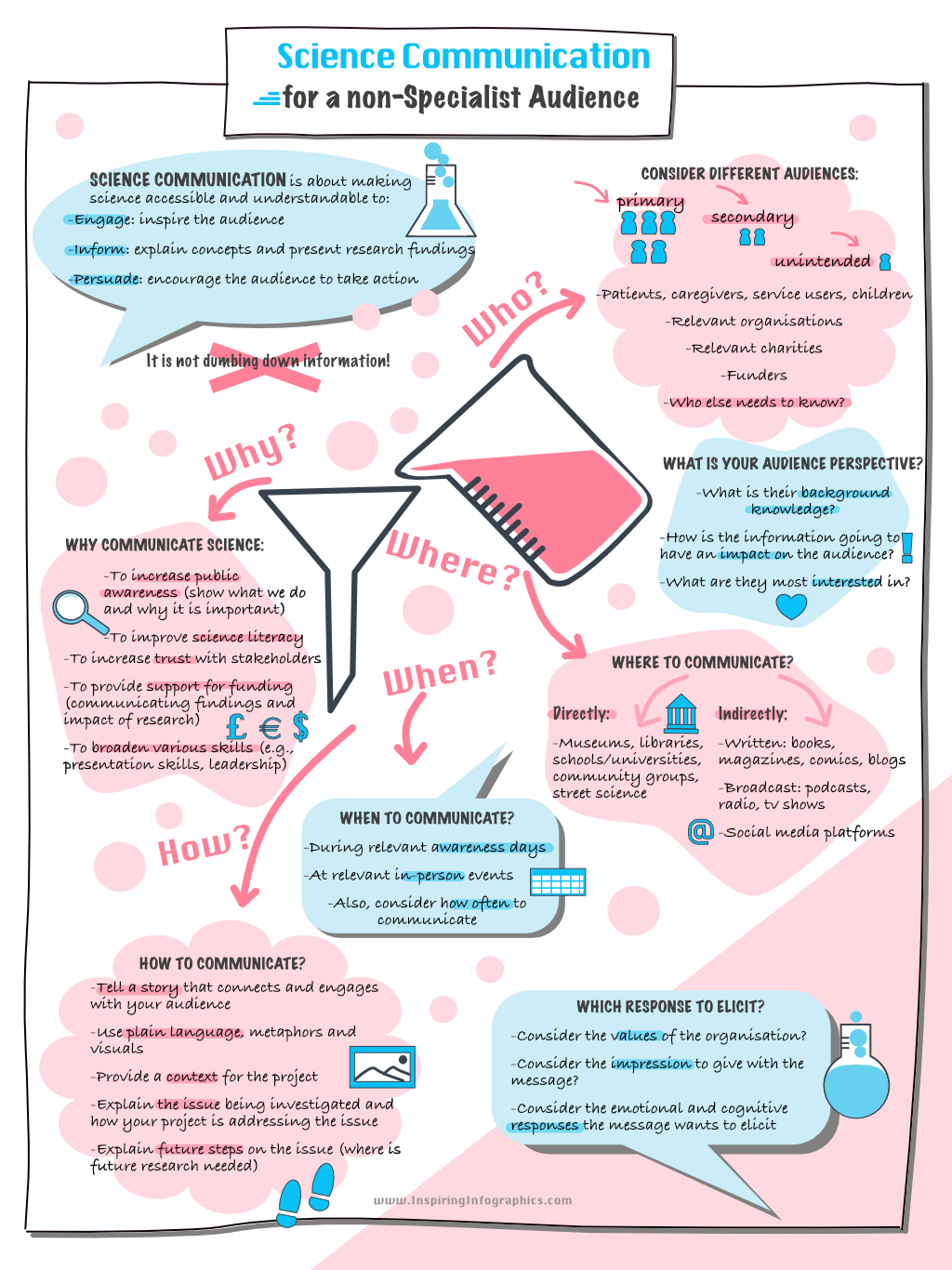
Science communication is about making science accessible and understandable to engage and inspire the audience, to explain concepts and present research findings and also to encourage people to take action. To communicate to a non-specialist audience, consider who is your primary audience, and also think about the secondary and unintended audiences. There could be different reasons to communicate science, for instance: to increase public awareness on a topic, to improve trust with stakeholders, or to explain funders why is necessary to conduct a piece of research. Also, for yourself as a scientist, science communication provides you with opportunities to broaden your skills. Consider your audience perspective: what do they know already about the topic and how much? What areas do you think they would like to find out more about? Telling a story using plain language, metaphors and visuals will definitely spark interest and curiosity from the audience. There are many different ways to communicate science, which could be directly, like for instance talking to the people in person in museums, or indirectly, for instance designing comics. See which awareness days could be relevant for your topic and if you missed one of the relevant days this year, then use the time to plan in advance for next one.
La comunicación científica consiste en hacer que la ciencia sea accesible y comprensible para involucrar e inspirar a la audiencia, explicar conceptos y presentar los resultados de las investigaciones y también alentar a las personas a actuar. Para comunicar a una audiencia no especializada, considera tu audiencia principal y también piensa en la audiencia secundaria e imprevista. Puede haber diferentes razones para comunicar la ciencia, por ejemplo: aumentar la conciencia pública sobre un tema, mejorar la confianza con las partes interesadas o explicar a los financiadores por qué es necesario realizar una investigación. Además, como científico, este tipo de comunicación te brinda oportunidades para ampliar habilidades. Considera la perspectiva de tu audiencia: ¿qué saben ya sobre el tema y cuánto? ¿Sobre qué áreas crees que les gustaría saber más? Contar una historia utilizando un lenguaje sencillo, metáforas y elementos visuales definitivamente despertará interés y curiosidad. Hay muchas formas diferentes de comunicar la ciencia, directamente por ejemplo hablando en persona en museos, o indirectamente por ejemplo, diseñando cómics. Mira qué días de concienciación podrían ser relevantes para tu tema y, si perdiste uno de los días relevantes este año, entonces usa el tiempo para planificar con anticipación para el año que viene.
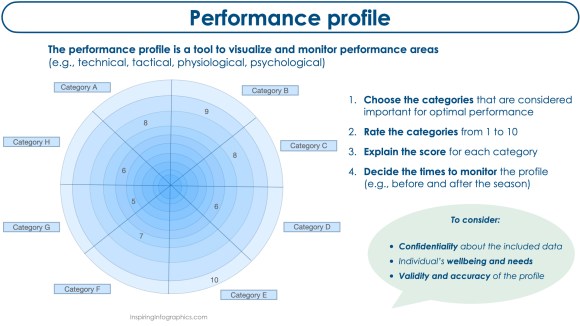
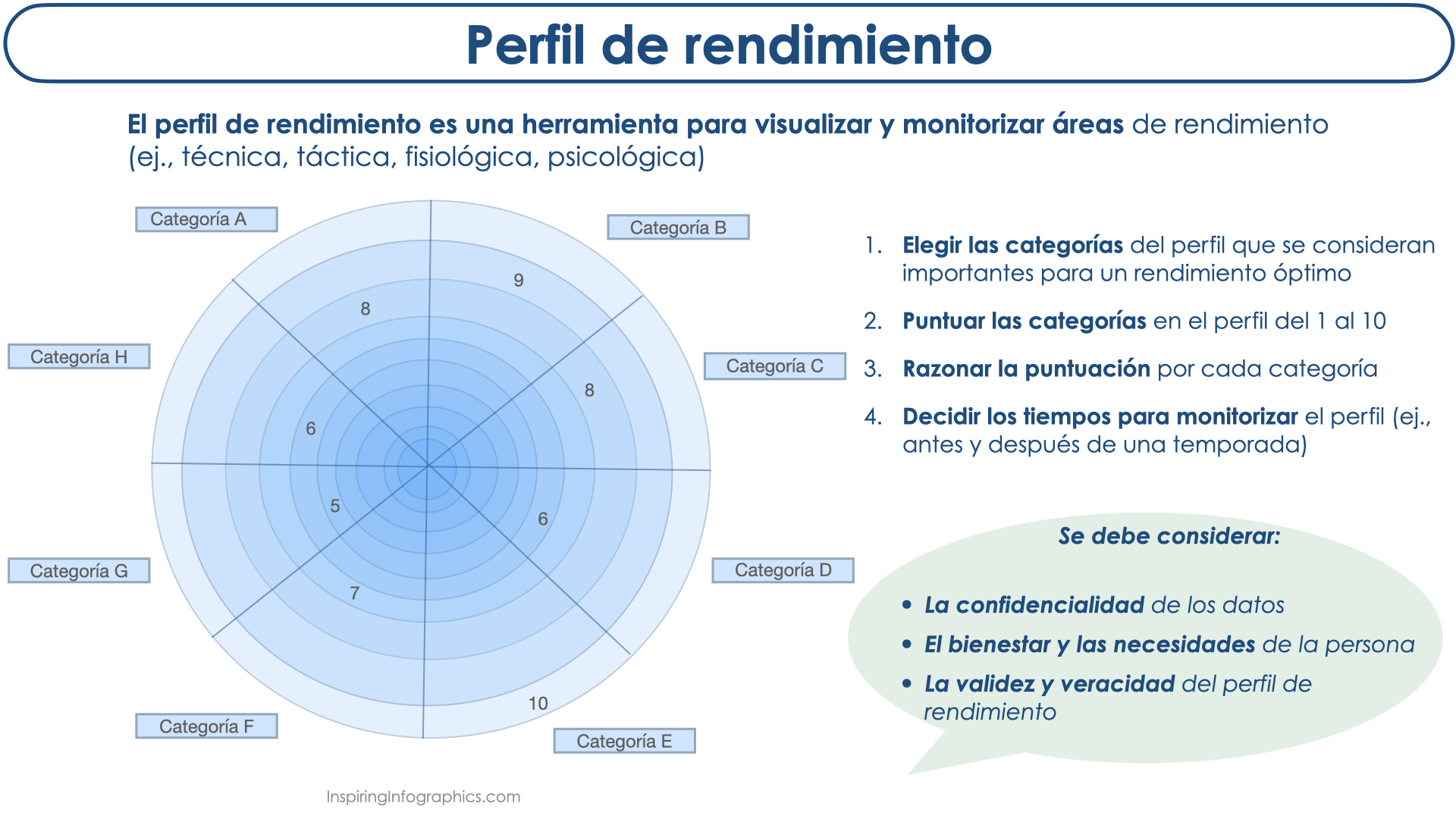
The performance profile was created by Butler and Hardy in 1992. It is a method to visualize and monitor certain areas of performance; and it is useful for goal setting, motivation, and self-awareness. It can be completed in several ways. Firstly, the categories to be included and the times when the values are going to be noted down (for instance, before and after the season) are selected. Then those categories get rated on a scale from 1 to 10. The first profile completed (e.g., before the season) could be compared to a second one (e.g., after the season) to see progress over time. When creating the profile, the following should be considered: confidentiality about the data included, the wellbeing and needs of the athlete, and the validity and veracity of the profile.
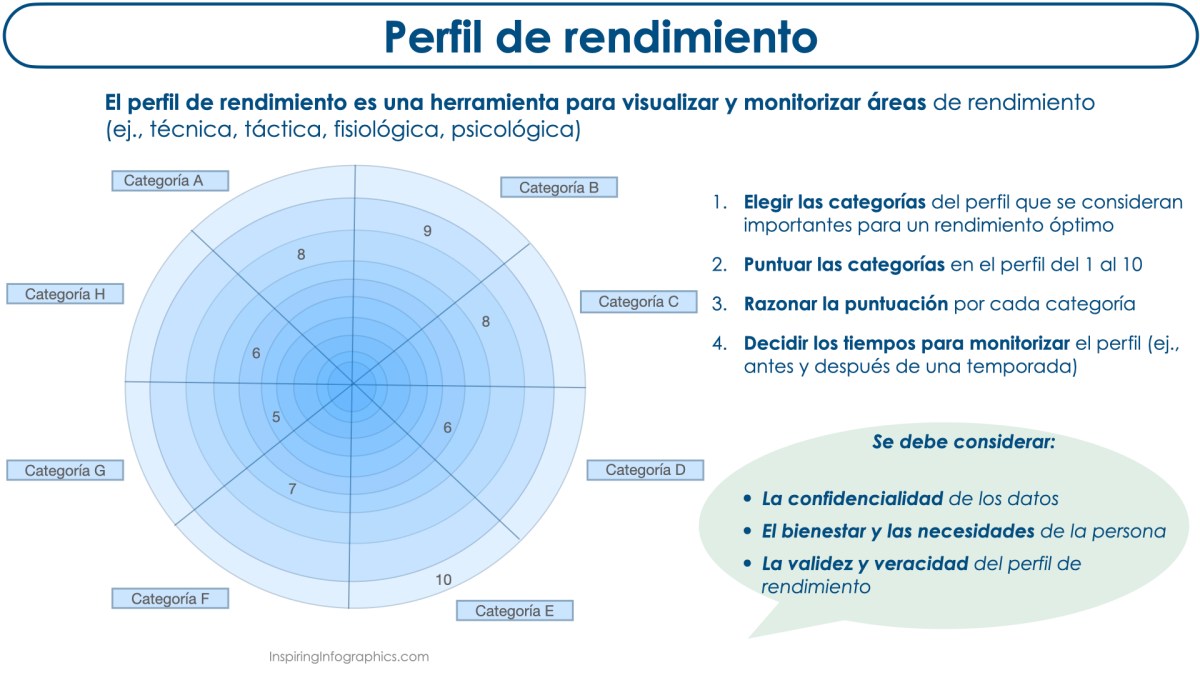
El perfil de rendimiento fue creado por Butler y Hardy en 1992. Es un método para visualizar y monitorear áreas destacadas del rendimiento; es útil cuando se establecen objetivos, para la motivación y el autoconocimiento. Aunque se puede hacer de varias maneras básicamente primero se escogen las categorías que se van a incluir y los tiempos en las que se van a apuntar los valores (por ej., antes y después de la temporada). Después se valoran las cualidades incluidas por ejemplo en una escala del 1 al 10. El primer gráfico hecho por ejemplo antes de la temporada se podría comparar con otro después de la temporada para ver el progreso. Al crear el perfil se debe considerar lo siguiente: confidencialidad sobre los datos incluidos, el bienestar y necesidades del atleta, y la validez y veracidad del perfil.
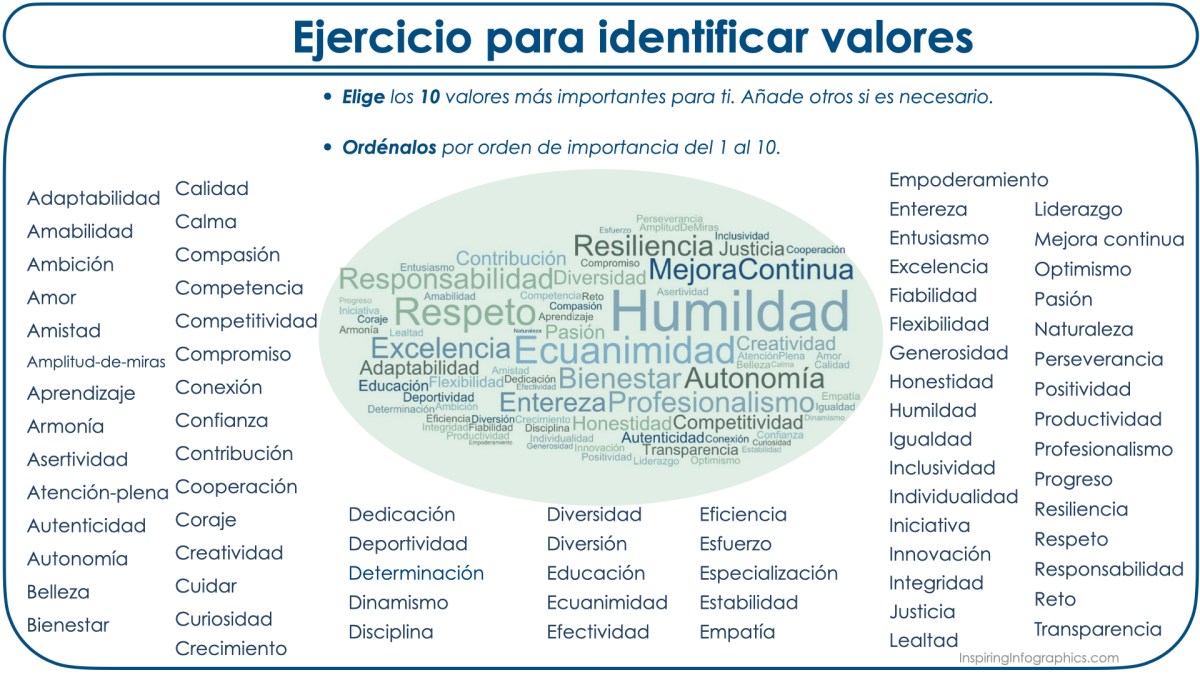
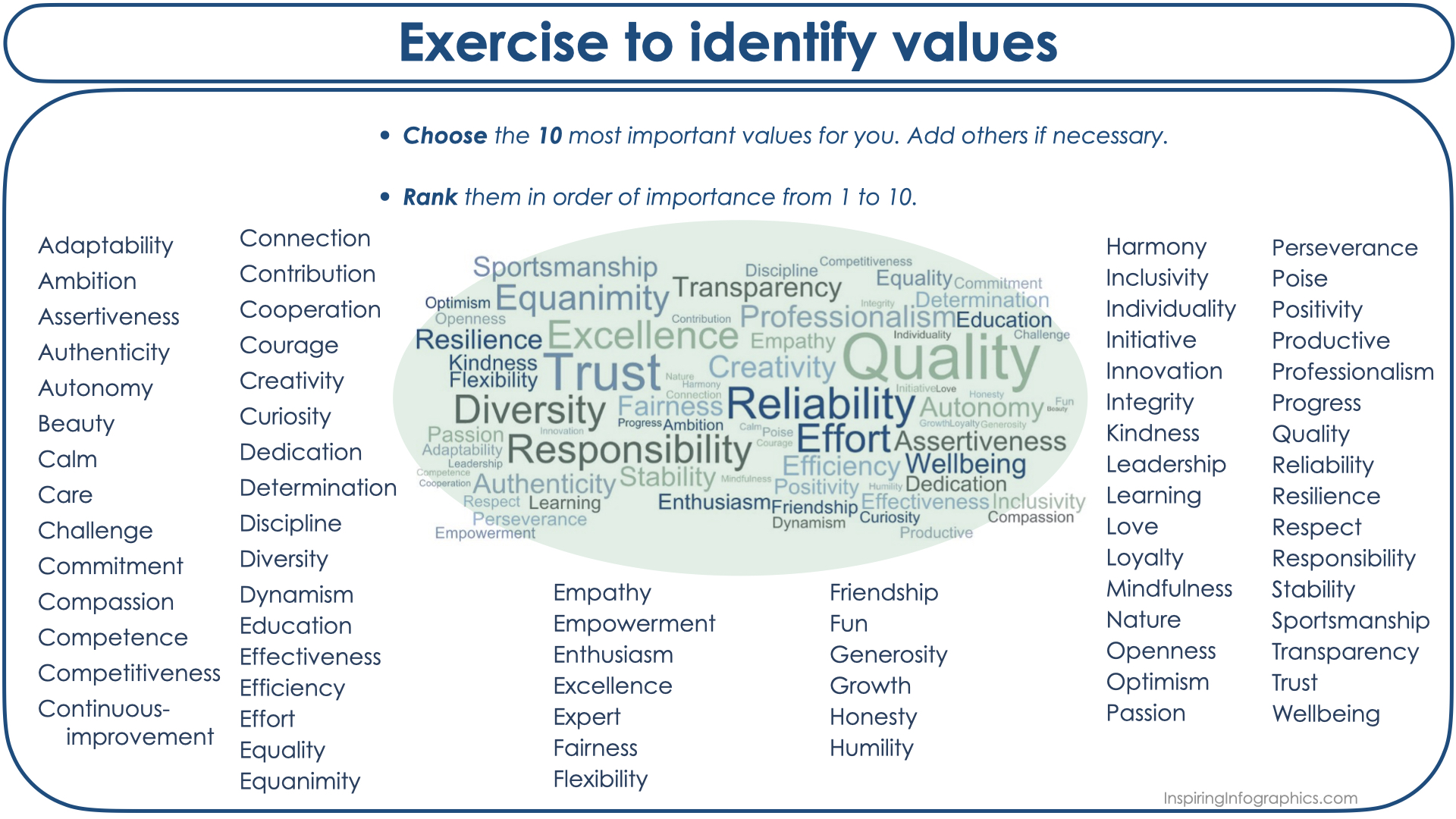
Just as people’s values guide their priorities, attitude and behaviour, in organizations they also represent the standards that direct them. In a leader, values can make her/his behaviour more oriented towards her/himself (e.g., needs and wants) or towards improving the people h/se leads. In an organization, values inspire its members, guide their behaviour, and differentiate the organization from others.
Valores
Así como los valores en las personas guían sus prioridades, su actitud y comportamiento, en las organizaciones también representan los estándares que las dirigen.En un líder, los valores pueden hacer que su comportamiento esté más orientado hacia sí mismo (necesidades y deseos) o hacia mejorar a la gente que lidera. En una organización, los valores hacen inspirar a sus miembros, guían su comportamiento, y diferencian a la organización de otras.
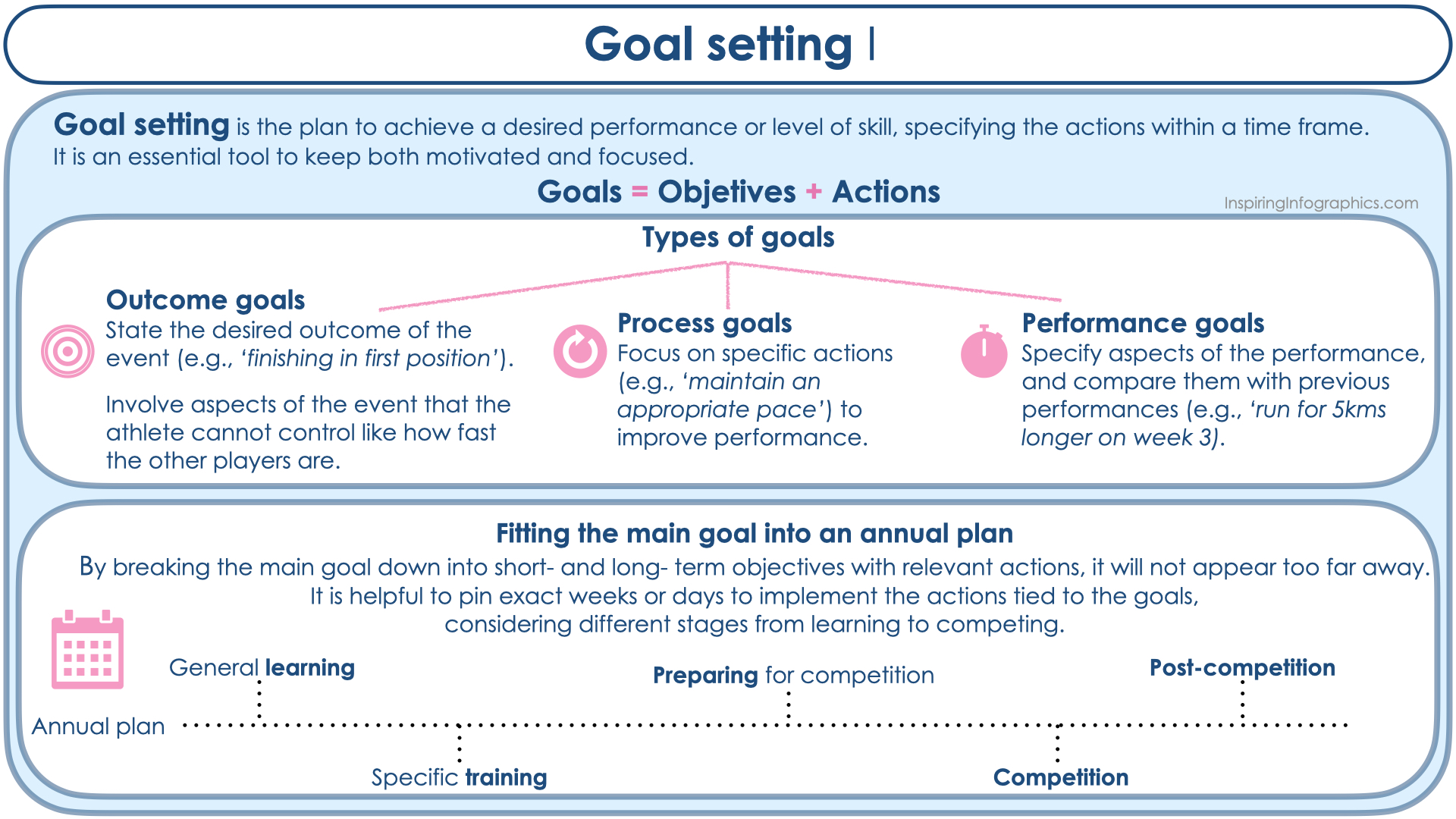
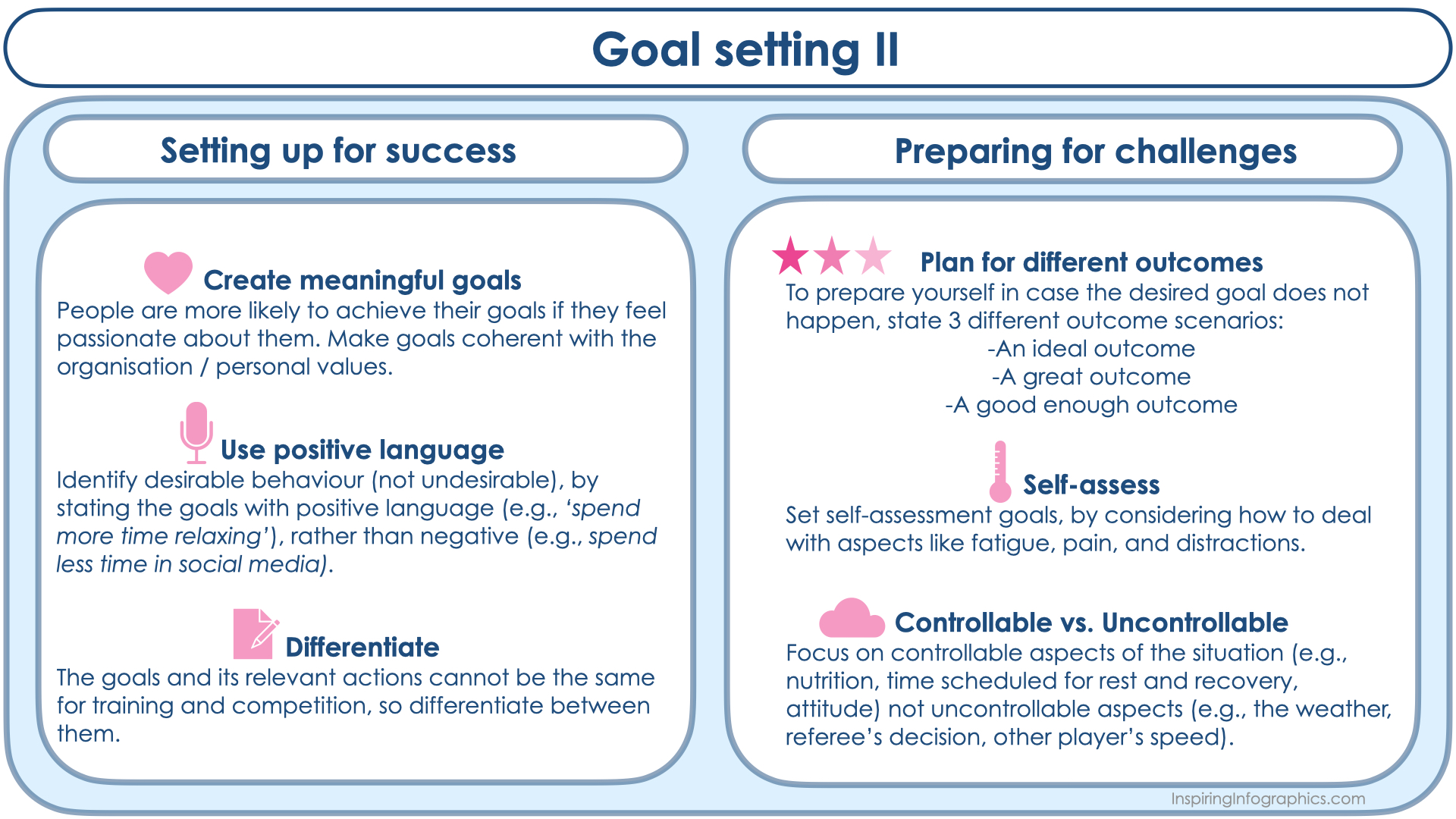
Before starting to train it is essential to set a goal to motivate ourselves, and stimulate our learning journey. To set up a goal like completing a 10kms run, we have to identify what we want to achieve (e.g., completing the race on a particular time, or simply just completing it), bearing in mind the time and resources available, and our physical condition.
When the goals are simply statements on what we would like to achieve, then we can get disappointed if we have not identified beforehand the steps that are going to lead us to it. Another source of disappointment is when we include aspects that are beyond our control, like for instance the speed of the other runners. For these types of goals (e.g., finishing first on a competition), part of the effort is wasted by comparing ourselves to others.
Once we have decided on a goal, we need to identify at least three objectives on a short term, being as specific as possible and including a time limit to achieve them (e.g., doing core, quads and biceps exercises three times a week, and doing yoga on the rest days). We also have to identify the actions we need to do to achieve the objectives (e.g., going to the gym, consulting a personal trainer on stretching and warming exercises on the first week).
A continuous evaluation of our performance objectives is another important aspect to succeed. Some athletes find useful writing the objectives on a diary alongside the exercises completed to check whether they are meeting the objectives or they need to be modified. In this diary, they can also reflect on the obstacles they encounter and ideas to overcome them.
It is also worth remembering that the goal is the level of performance we want to achieve and the success depends on whether we achieve the actions related to the objectives.
Goal = desired level of skill or performance
Goal = objectives + actions
Goal setting helps us to: motivate, have a focused effort and learn.
The goal should be realistic, containing objectives and actions linked to them.
The objectives and actions have to be specific and have a deadline.
It is important to periodically assess progress and if necessary modify the objectives or actions.
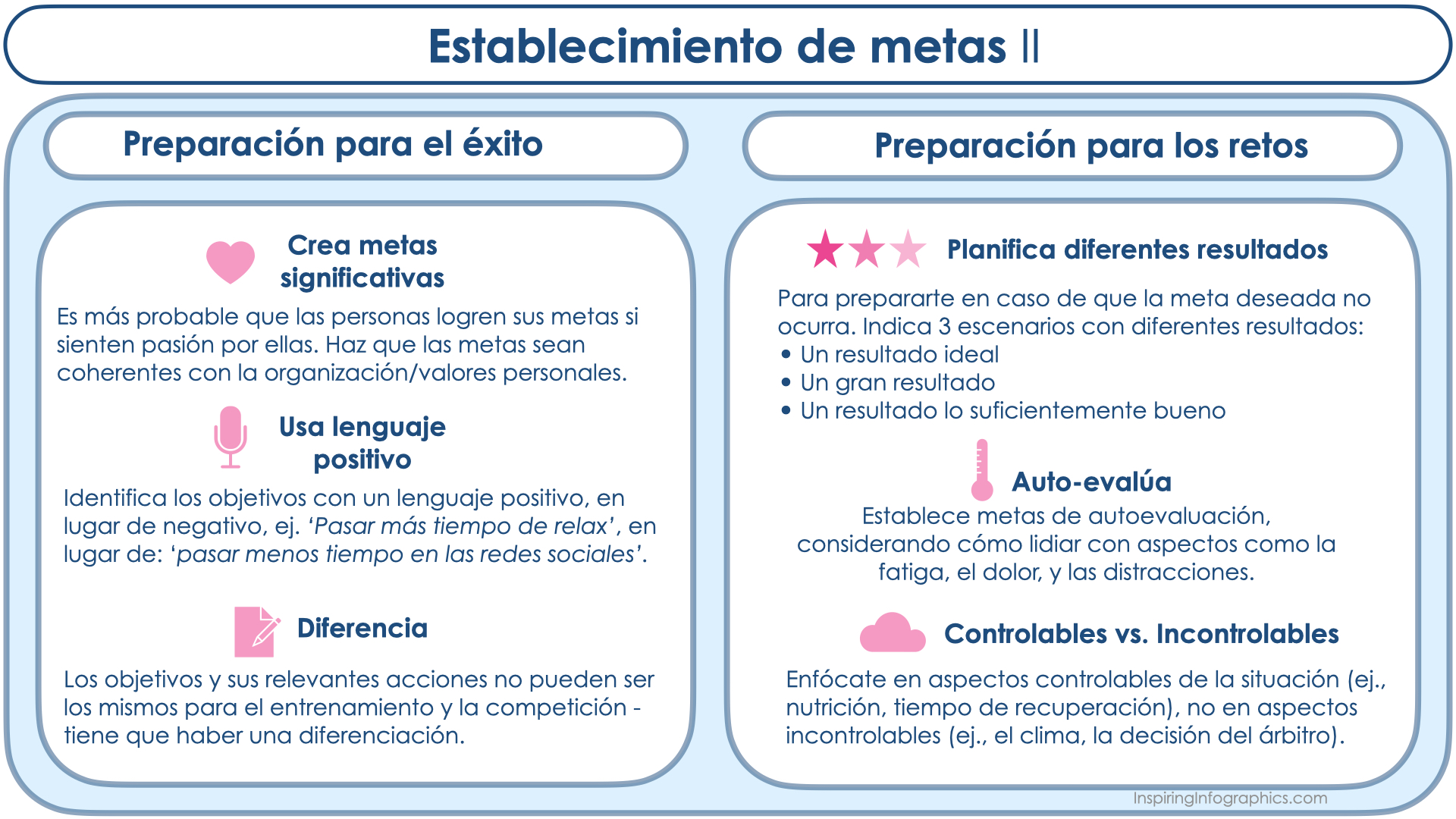
Antes de comenzar la preparación de entrenamiento es imprescindible establecer una meta para motivarnos, y estimular nuestro esfuerzo y aprendizaje. Para fijarnos una meta, (ej. completar una carrera de 10kms) tenemos que identificar lo que queremos conseguir (ej. terminar la carrera en un tiempo aproximado, o simplemente completarla), teniendo en cuenta el tiempo disponible, recursos, y condición física.
Cuando las metas sólamente se basan en lo que queremos conseguir entonces nos podemos desilusionar si no hemos identificado los pasos que nos pueden llevar a ella. Otra fuente de decepción es cuando nos fijamos metas que involucran aspectos que no podemos controlar como por ejemplo la velocidad de otros atletas. En este tipo de metas (ej., quedar primero en una competición) el esfuerzo se desaprovecha al compararnos con los demás.
Una vez nos hemos fijado una meta, hay que identificar al menos tres objetivos a corto plazo, siendo lo más específicos posible e incluyendo una fecha límite para conseguirlos (ej., hacer tablas de ejercicios complementarios de abdominales, cuádriceps y biceps tres veces a la semana, y hacer ejercicios de yoga en los días de descanso). También hay que identificar las acciones que necesitamos para conseguir los objetivos a corto plazo (ej., ir al gimnasio tres veces a la semana, consultar con el entrenador personal ejercicios de estiramiento y calentamiento en la primera semana).
La evaluación periódica de nuestros objetivos de rendimiento es un aspecto importante. Para ello puede resultar útil escribir en un diario los objetivos programados y el ejercicio que hemos realizado para comprobar si vamos cumpliendo los objetivos o si se deben modificar. En este diario también se puede reflexionar sobre los obstáculos que nos vamos encontrando y anotar ideas para poder superarlos.
Meta = el nivel de habilidad o rendimiento que queremos conseguir
Meta = Objetivos + Acciones
Fijarnos una meta nos ayuda a: motivarnos, esforzarnos, y aprender.
La meta debe ser realista, conteniendo objetivos y acciones ligadas a éstos.
Los objetivos y acciones tienen que ser específicos y tener una fecha limite.
Hay que evaluar periódicamente el progreso y si es necesario modificar los objetivos o acciones.







 InspiringInfographics