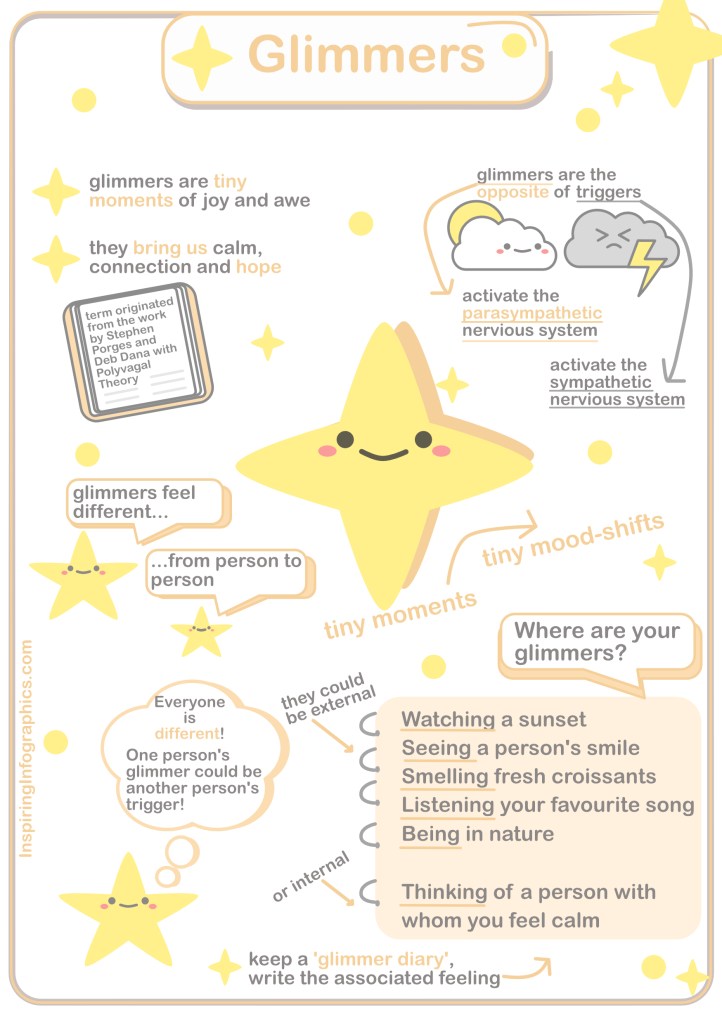
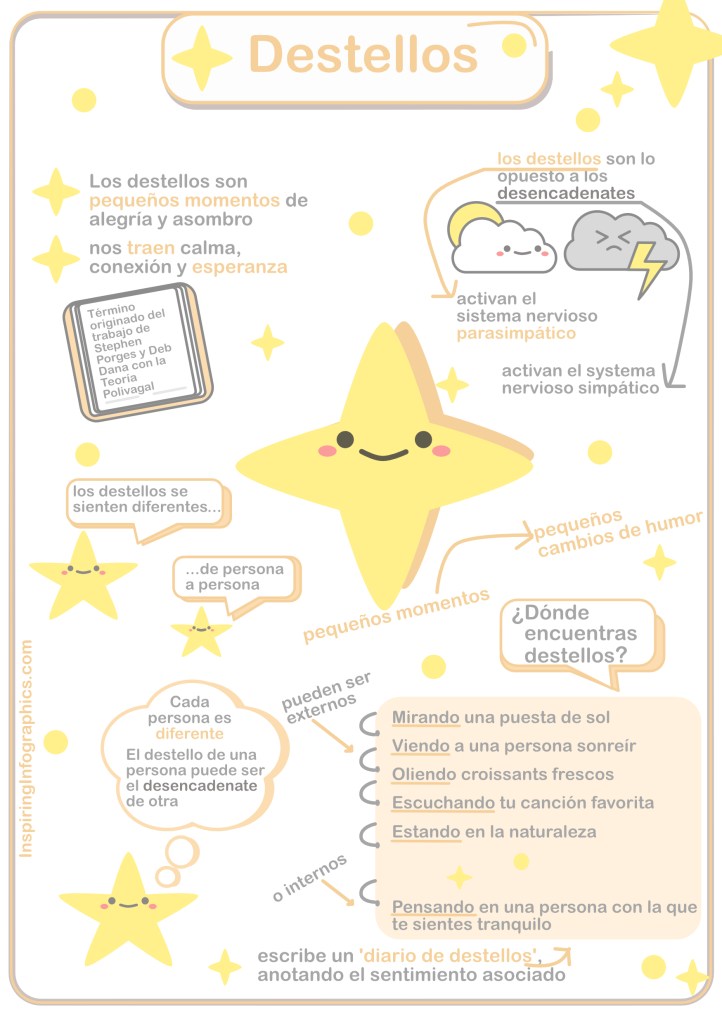
Glimmers are the opposite of triggers, little moments of joy that bring us calm and hope. Watching a sunset, smelling freshly made croissants, listening to a beautiful song… are some of my glimmers; although they are different from person to person.
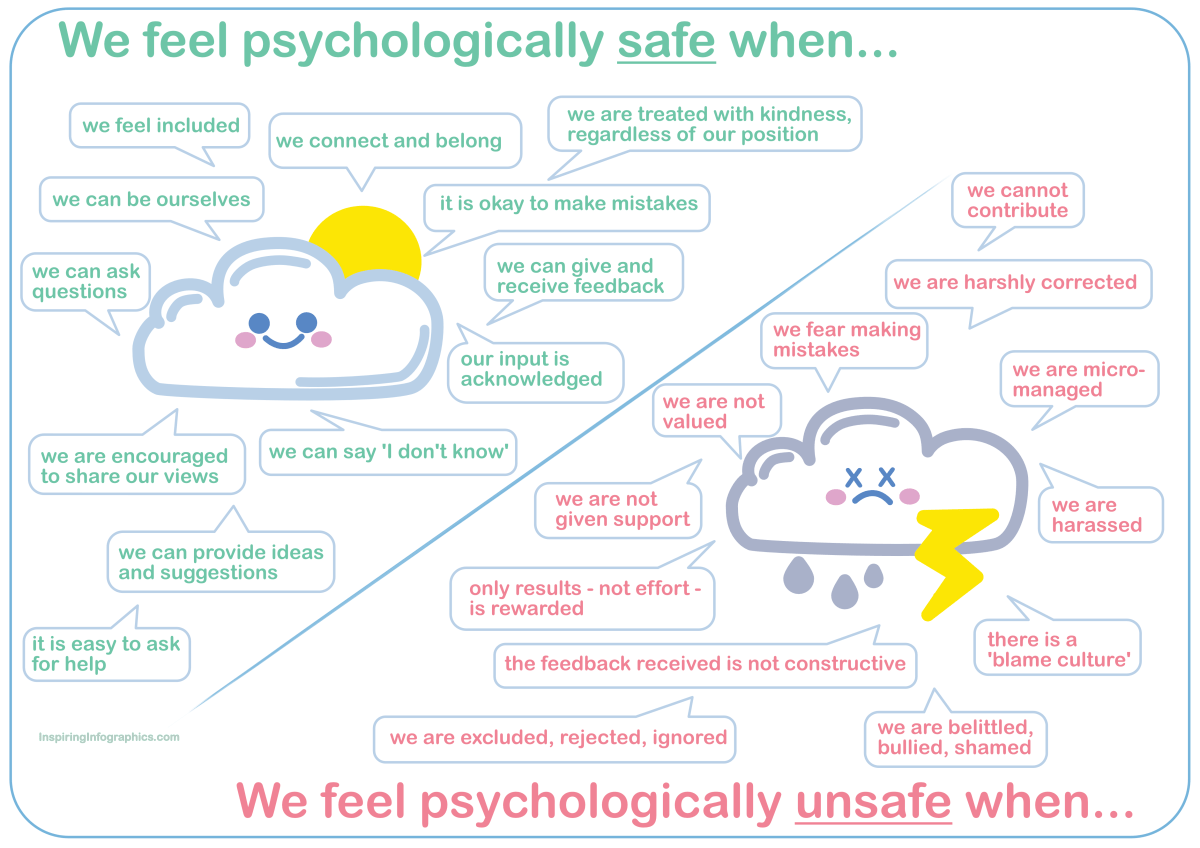
Psychological safety: the definition of psychological safety was developed by Kahn in 1990, as the ability to ‘employ or express themselves physically, cognitively, and emotionally’. Later, in 1999, after researching performance in clinical teams, Edmonson came up with the following definition: ‘a shared belief held by members of a team that the team is safe for interpersonal risk taking’. More recently, in 2019, Clark suggested a model with four stages for progression to psychological safety: 1 Inclusion safety: feeling included and accepted for who we are. 2 Learner safety: feeling safe to learn, ask questions, give and receive feedback, and make mistakes. 3 Contributor safety: being encouraged by the team to contribute. 4 Challenger safety: feeling safe to challenge the status quo.
Seguridad psicológica: la definición de seguridad psicológica fue desarrollada por Kahn en 1990, como la capacidad de ‘emplearse o expresarse física, cognitiva y emocionalmente’. Más tarde, en 1999, después de investigar el rendimiento en equipos clínicos, Edmonson llegó a la siguiente definición: ‘una creencia compartida por los miembros de un equipo de que el equipo es seguro para asumir riesgos interpersonales’. Más recientemente, en 2019, Clark sugirió un modelo con cuatro etapas para progresar hacia la seguridad psicológica:
Seguridad de inclusión: sentirse incluidos y aceptados por lo que somos.
Seguridad del aprendiz: sentirse seguros para aprender, hacer preguntas, dar y recibir comentarios y cometer errores.
Seguridad para contribuir: ser alentado por el equipo a contribuir.
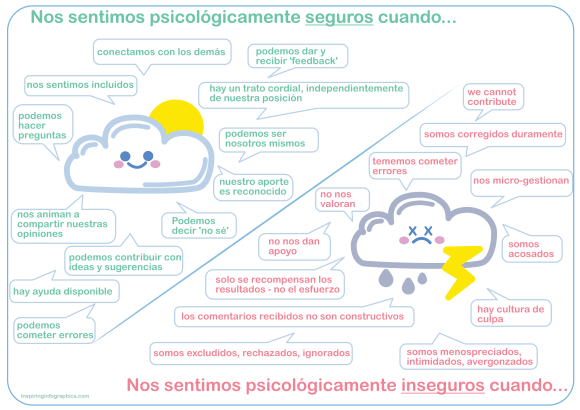
 InspiringInfographics